Dubai enforces strict regulations on commercial vehicles to reduce congestion, improve road safety, and maintain efficient traffic flow. These restrictions include designated truck routes, restricted operating hours, permit requirements, and penalties for violations. Businesses involved in logistics, transportation, and moving services must understand these rules to avoid fines and delivery delays.
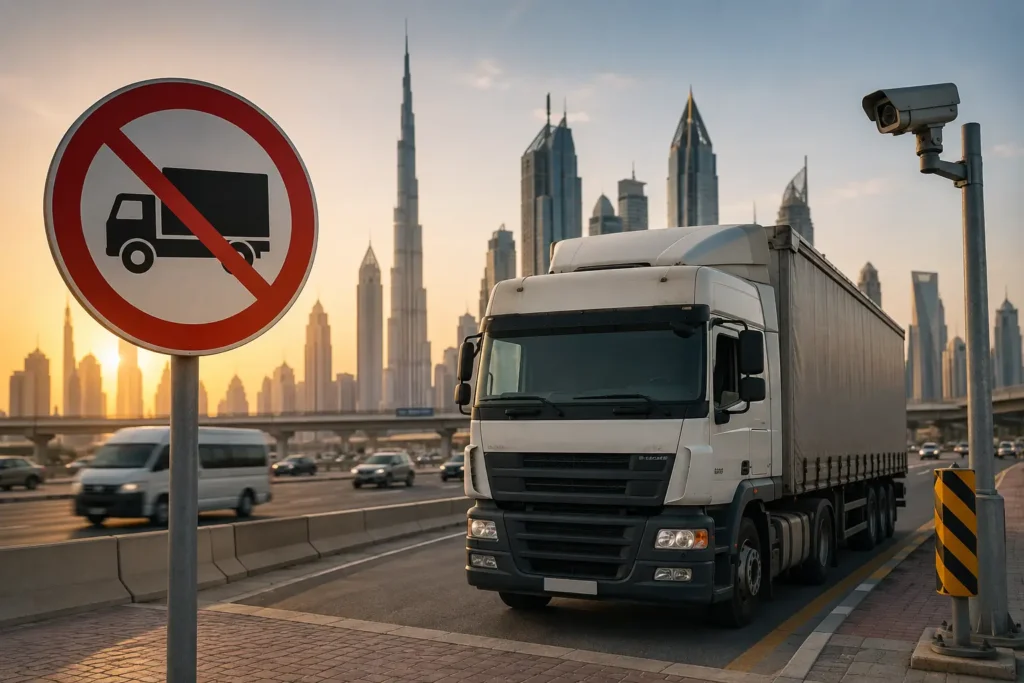
Dubai’s road network supports millions of daily journeys.
Passenger vehicles.
Public transport.
Tourist traffic.
Commercial transportation.
Heavy vehicles play a vital role in the city’s economy, but unrestricted access can increase congestion during peak travel periods.
To maintain smooth traffic flow, authorities have implemented regulations that control when and where commercial vehicles can operate.
These measures help balance business needs with the demands of everyday road users.
One of the most important regulations affecting truck operators is the Dubai no entry time policy.
Certain roads and zones restrict commercial vehicle access during peak traffic periods.
These restrictions are designed to reduce congestion on major routes that experience high passenger vehicle volumes.
Drivers and fleet operators should always verify current restrictions before scheduling deliveries or transportation services.
Failing to follow designated timings can result in fines and operational disruptions.
Commercial vehicles are often required to use designated routes rather than selecting the shortest path through residential or heavily congested areas.
Approved routes help improve safety while reducing disruption to local communities.
Using authorized roads also helps operators avoid unnecessary penalties and delays.
Route planning has become an essential part of efficient transportation management within Dubai.
Certain commercial operations require special permits depending on vehicle type, cargo, destination, and operating area.
Permits help authorities regulate commercial traffic while ensuring transportation activities comply with local regulations.
Businesses that operate regularly across Dubai should ensure all required approvals remain current and valid.
Proper documentation helps avoid enforcement issues and keeps operations running smoothly.
Moving companies rely heavily on proper route planning and scheduling.
A relocation may involve multiple trips, large vehicles, and access to residential communities.
Understanding road restrictions allows professional movers to coordinate transportation efficiently while minimizing delays.
At E-Home Moving, route planning forms an important part of every relocation project. By understanding vehicle restrictions and approved access routes, we help ensure smoother and more efficient moving experiences across Dubai.
Commercial operators traveling between emirates must also consider neighboring regulations.
Many businesses search for information about Sharjah road timings for heavy vehicles and Sharjah road timings heavy vehicles because transportation routes frequently cross emirate boundaries.
Traffic restrictions can vary depending on location, making advance planning essential for logistics providers and moving companies serving multiple emirates.
Understanding both Dubai and Sharjah regulations helps avoid scheduling conflicts and transportation delays.
Commercial vehicle restrictions are an important part of Dubai’s traffic management strategy. Understanding designated routes, permit requirements, operating hours, and potential penalties helps businesses maintain efficient operations while remaining compliant with local regulations.
At E-Home Moving, careful route planning and compliance with transportation regulations help us provide reliable moving services throughout Dubai and the UAE, ensuring every relocation is completed as smoothly and efficiently as possible.